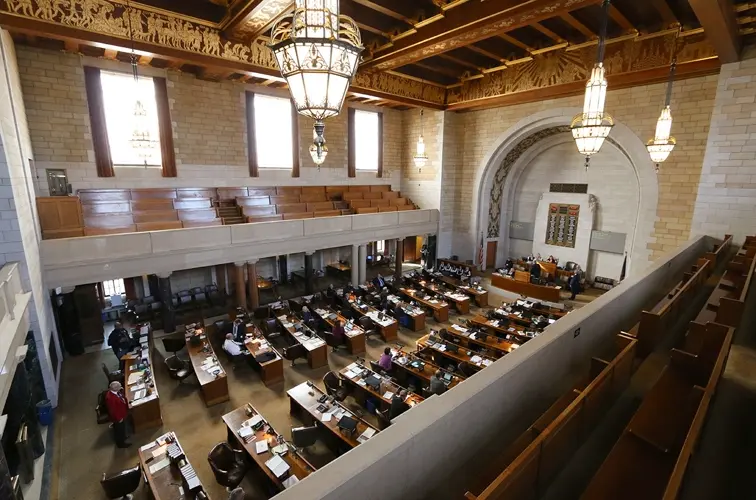
Attempt to cap Nebraska school property tax growth fails

A proposal to cap Nebraska school property tax growth stalled in the Legislature on Tuesday amid objections from some lawmakers that it would tie the hands of local districts.

February 8, 2022Updated: February 8, 2022

News Channel NebraskaBy News Channel Nebraska

LINCOLN, Neb. (AP) — A proposal to cap Nebraska school property tax growth stalled in the Legislature on Tuesday amid objections from some lawmakers that it would tie the hands of local districts.

Lawmakers fell five votes short of the 33 they needed to overcome a filibuster and bring the measure to a first-round vote. The 28-21 vote effectively sidelines the measure for the rest of the year.

The proposal by state Sen. Tom Briese, an Albion farmer, would have allowed school districts to increase property tax collections by either 2.5% or the inflation rate, whichever is greater. The bill included exceptions for districts with large enrollment increases and other special circumstances. Districts would have to adjust their property tax collections based on the revenue they receive from other sources, such as state aid.

Districts could override the limits with super-majority votes of school boards of voters.

Supporters pointed to farmers and homeowners who have seen sharp increases in their property tax bills in recent years and warned that failure to act could lead to more extremely measures.

Opponents argued that the measure undermined local control in schools and that voters can still hold accountable school officials who overspend.

Regional

Howells-Dodge Survives Bloomfield Rally for D-1 Crown

Howells-Dodge Survives Bloomfield Rally for D-1 Crown

7,000 Adoptions: A Decade of The Animal Shelter of Northeast Nebraska

7,000 Adoptions: A Decade of The Animal Shelter of Northeast Nebraska

Norfolk FFA students use freeze-drying to serve community

Norfolk FFA students use freeze-drying to serve community

Platte county considers shift to all-commissioner governance

Platte county considers shift to all-commissioner governance