
New Pillen-championed law gets tough on China, may cost Nebraska companies

A state law, easily passed by the Nebraska Legislature last year after little debate, now threatens the state tax incentives of Nebraska’s most global companies, because they do business in China.
February 13, 2026Updated: February 13, 2026
By Naydu Daza Maya

By Henry J. Cordes, Flatwater Free Press

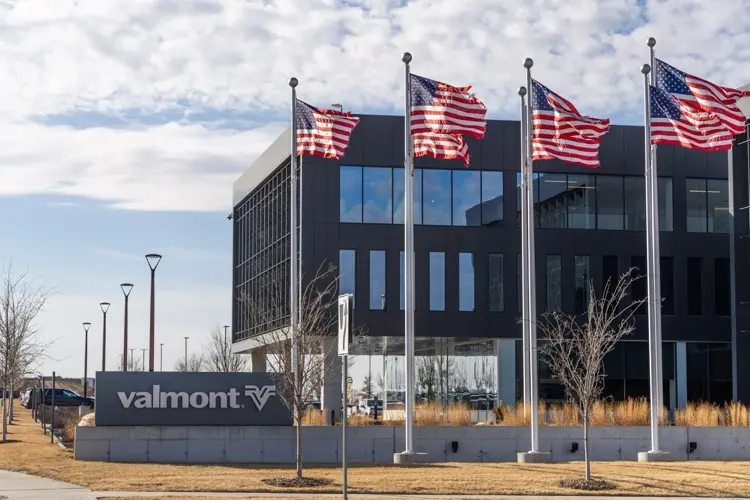
Valmont represents a home-grown Nebraska success story, the 80-year-old company that pioneered the center pivot that helps corn grow in the Cornhusker State.

The Fortune 1000 company still operates facilities in its Valley birthplace as well as in Columbus, West Point, Grand Island and McCook. It oversees global operations spanning five continents from a gleaming $50 million headquarters in west Omaha. 

But under a new law Gov. Jim Pillen pushed to passage last year, that stalwart Nebraska company might be labeled something else: a “foreign adversarial company” — a status that would make it ineligible for the state tax incentives it has earned for choosing to grow in the state. 

That tough-on-China law, championed by Pillen and overwhelmingly approved by the Legislature, now threatens to blow a hole into state incentive programs that for decades have been a bedrock of state business recruitment efforts. It has also thrown into doubt the tax breaks earned by dozens of companies operating in Nebraska and set off alarms within the business community. 

How did this happen? 

Pillen’s new law sought to crack down on American adversaries like China by barring businesses from such countries from receiving state tax incentives. But its expansive definition of “foreign adversarial company” has been interpreted by the Nebraska Department of Revenue to include companies with a subsidiary based in those countries. 

Hundreds of U.S. and international companies — among them major Nebraska-born employers Valmont, Lindsay, Fiserv and Werner — have established subsidiaries in China to do business within the world’s second-largest economy. 

In a statement Thursday, the Pillen administration signaled a willingness to amend the law, seeming to differentiate between Chinese-owned companies and firms here that have subsidiaries in China. 

But that runs counter to the state’s actions to date. 

Since the law took effect Oct. 1, the Revenue Department has sent letters to some companies that have subsidiaries in China suggesting they will be unable to collect on their tax incentive agreements with the state. 

The number of letters sent and to what companies is unknown, as Pillen’s administration would not say, and confidentiality laws protect taxpayer records. But the possible scope is wide. 

A Flatwater Free Press review revealed at least 55 companies with both active tax-incentive agreements and apparent Chinese subsidiaries.

They include well-known Nebraska companies and iconic international firms that employ thousands of people in the state, including Costco, Hormel, Kawasaki, 3M, Monsanto and Walmart. 

Effectively, at a time when business leaders say Nebraska already lags in the state-by-state battle for new business, Nebraska has unilaterally disarmed. Under current law, the hundreds of multinational companies that have Chinese subsidiaries can’t count on tax incentives in Nebraska. 

“At a minimum, LB 644 sends an unfortunate message to the national and local business communities and to the national site selection community that they cannot rely on the commitment Nebraska has made in its job and investment incentives,” reads an analysis of the law written by Omaha tax attorneys and tax incentive experts Nick Niemann and Matthew Ottemann. “The ripple effect is yet to be seen.” 

The new law also created an apparent conflict of interest for Pillen. 

One foreign company to which the incentives ban clearly applies: Smithfield, the U.S. pork producer now owned by a Chinese company. Smithfield operates a major pork production plant in Crete and has other operations in Lincoln and Omaha.

Pillen’s family business, the state’s largest producer of hogs, competes with Smithfield through a Fremont hog slaughter plant it co-owns. Pillen Family Farms has also sold hogs to Smithfield. 

Flatwater efforts to report on the Revenue Department letters and concern they have stirred have largely been met with silence from both the Pillen administration and the state business community. The Governor’s Office did not respond to list of questions posed by Flatwater. 

But in the statement Thursday, Pillen spokesperson Laura Strimple suggested that changes will be forthcoming, with an emphasis on denying tax incentives to companies that are owned by China or the Chinese ruling party. 

“As with any bill that is passed, there will be follow-up legislation and administrative guidance documents issued,” she said. “In this instance, it will be to ensure that tax credits are not given to Chinese-owned companies and entities.” 

Officials from the Nebraska and Omaha chambers of commerce declined to be interviewed. But the Greater Omaha Chamber released a statement from its lobbyist indicating it has been engaged in “productive and ongoing conversations” and is “working toward an agreeable solution with senators and the (Pillen) administration.” 

Amazingly, the incentives provision was not discussed as LB 644 passed in the 2025 Legislature. Nearly all the debate centered on the bill’s main provision, requiring any “agent” of a foreign adversary to register in Nebraska.

State Sen. Eliot Bostar, a Democrat from Lincoln who introduced the bill on Pillen’s behalf, deferred to the governor on the intended scope of the law. He said the language in the bill came from the administration. 

But Bostar said there are arguments for why the incentives ban should apply to Nebraska companies that have Chinese subsidiaries. 

“There are questions about whether or not Nebraska should be giving taxpayer funds to companies for them to then turn around and take those dollars and invest them in adversaries of the United States,” he said.  

Sen. John Fredrickson, a Democrat from Omaha, said he has picked up on the concerns LB 644 has raised among business leaders. He said the situation shows the pitfalls that can result when the state engages on national security issues best left to the federal government. 

“I think it’s a perfect example of what happens on the state level when we try to overstep our role,” Fredrickson said. “It’s almost like we’re playing GI Joe in here sometimes.”

****

It wasn’t long ago that the State of Nebraska officially embraced doing business with China. 

Then-Gov. Pete Ricketts took trade missions to China and touted the opportunities available there for Nebraska businesses. China at the time was Nebraska’s second-largest export market outside of North America and a key market for Nebraska agricultural products, particularly soybeans. 

“China’s growing economy offers nearly boundless opportunities for Nebraska ag producers and manufacturers,” Ricketts was quoted as saying in 2016.

But the election of President Donald Trump that year dramatically changed the China-U.S. dynamics. Trump took a hard line on China — something many on both sides of the aisle felt was long overdue. 

By the time Ricketts left office, he too had taken a hard line, banning the Chinese social media platform TikTok on state computers and closing Nebraska’s trade office in Shanghai. 

Pillen likewise came into office as a China hawk. In 2024, the Legislature passed Pillen measures to crack down on foreign land ownership and to create a state commission to study threats posed by China. 

Then, a year ago, Pillen had Bostar introduce LB 644, the “Foreign Adversary and Terrorist Agent Registration Act” and the “Crush Transnational Repression in Nebraska Act.” 

The bill primarily required those engaging in politics, lobbying, public relations or interacting with state or local officials on behalf of foreign adversary nations to register with the Nebraska attorney general. 

LB 644 mirrored laws passed in other Republican-led states and the existing federal Foreign Agents Registration Act. The adversary nations it identified were China (including Hong Kong), Russia, North Korea, Iran, Cuba and Venezuela’s Maduro regime. 

To date, no such agent has registered under the act, according to the Attorney General’s Office.

But deep within the bill was a bar on “a foreign adversarial company” from receiving benefits under state economic incentive programs. 

Bostar mentioned the incentive provision during a committee hearing and when he introduced the bill on the floor. But it otherwise received no discussion, shedding no light on the scope of companies it was intended to apply to. 

The only opponent during the public hearing was the lobbyist for defense attorneys, who opposed the criminal penalties the law imposed. The state’s many business lobbyists publicly raised no concerns about the incentives provision. 

After the bill passed 37-11, Pillen celebrated the measure and other actions intended to protect Nebraska infrastructure, land and technology from China and other foreign adversaries. 

In January, Pillen introduced another bill seeking to keep Nebraska universities from accepting funding from a foreign adversary. That same day, he touted recognition Nebraska has received from State Shield, an organization pushing for state-level measures targeting China, including in Nebraska. 

“The Communist Party in China is America’s biggest foreign adversary,” Pillen said in a recent social media post. “In Nebraska, we are setting the bar for what states can do to counter CCP aggression and interference.” 

****

The first public concerns raised about the new law came from an Omaha lawyer who arguably knows more about state business incentives than any other Nebraskan.

Nearly four decades ago, Omaha attorney Niemann was the primary drafter of Nebraska’s first performance-based tax incentives program, LB 775. It still undergirds the state’s current Imagine Nebraska incentives. Under the act, companies pledge to invest in new projects and create jobs. In return, the state gives them state tax rebates and credits to use against future taxes.

Niemann and law partner Ottemann, in their October analysis of LB 644 published in a trade journal, noted the law’s “extraordinarily broad” definition of a foreign adversarial company. A company would be deemed one for setting up a Chinese subsidiary, they said, or even if one of those six adversary nation governments bought a single share of company stock. 

Identifying the companies

Flatwater identified at least 55 companies operating in Nebraska that appear to have both state incentives agreements and subsidiaries in China. 

It did so by using the state’s 2025 public incentives report – which shows companies with active state tax incentive agreements – then comparing that list to publicly available corporate information regarding Chinese subsidiaries. 

Flatwater found 45 companies that listed Chinese subsidiaries on 10-K reports filed with the Securities and Exchange Commission or their corporate annual reports. A few of the companies also listed Russian subsidiaries. 

Flatwater identified another 10 companies that information on their websites, corporate profiles or media reports suggested had Chinese subsidiaries. 

There are likely more. Some companies do not list all of their subsidiaries on disclosure reports or are privately held. 

In the most recent two-year reporting window, 28 of the companies Flatwater identified as having apparent Chinese subsidiaries received more than $50 million in tax abatements from the state in return for their new jobs and investments. 

But whether they will all continue to receive such benefits now seems in doubt.

he state was also applying the new law to existing economic development projects, the attorneys wrote — seemingly the first time Nebraska has tried to make retroactive changes to signed incentive contracts. It means companies falling under the new law can’t collect on incentives they have already earned.

The attorneys questioned the move’s legality, saying it could violate state and federal  law. 

“Communities and employees may bear an unexpected cost, depending on the impact to Nebraska’s national reputation as a state that retroactively changes the rules of engagement,” they wrote. 

Niemann and Ottemann declined to speak to Flatwater on LB 644. 

The new Nebraska law’s impact was also noted by international accounting firm Ernst & Young, which called it “unprecedented in its effect.”

It appears the law has begun to impact companies operating in Nebraska. 

In December, Flatwater obtained a copy of a letter the Revenue Department sent out, with the name of the company and other identifying details redacted. 

The letter indicates that the company, which was seeking a sales tax refund under a state incentives program, appeared to be the parent of one or more subsidiaries located in a foreign adversary country. Based on that, the department “believes that the applicant may be considered a foreign adversarial company” and therefore “ineligible to receive any benefit” under the incentives program. 

The company was invited to respond before the department made a final determination. 

No company reached by Flatwater has acknowledged receiving such a letter. A tax accountant, speaking on condition of anonymity, indicated having clients impacted. 

Such letters became a topic of discussion during the Greater Omaha Chamber’s December board meeting. A chamber official told those present to look out for the letters, and in an ensuing discussion there was a sense of alarm. 

Chamber officials declined to comment, saying their meetings are private. 

The 55 companies that Flatwater identified as having apparent Chinese subsidiaries have operations and workers across Nebraska and pledged in their state incentive agreements to invest $2.6 billion while creating nearly 5,000 new jobs. 

****

Just over a month after signing LB 644 last year, Pillen appeared at a press conference in front of the U.S. Department of Agriculture building in Washington. 

There, he and a number of top Trump administration officials talked of the national security threat posed by Chinese ownership within U.S. agriculture. Particular targets of the discussion that day: Smithfield, the pork producer bought by Hong Kong-based WH Group in 2013, and Syngenta, the seed and ag chemical company bought by ChemChina in 2017. 

“Syngenta called me, wanted to come to the Capitol to have a meeting,” Pillen said. “And I said I have no interest in having a meeting — have no interest in you being in Nebraska,” Pillen said during the press conference. “My suggestion would be to leave.” 

Based on those comments, it seems clear Pillen has no issue with denying tax incentives to Chinese-owned firms — at least three of which are listed as having active incentive agreements with the state. 

Syngenta has a pair of incentive agreements for nearly $90 million in plant investments near Grand Island and in the Omaha metro. The company has since sold one of its central Nebraska plants to an American company — a fact Pillen celebrated during the Washington press conference. 

Smithfield has three active agreements for $26 million in plant investments in Crete and Omaha that were projected to add more than 200 jobs. 

Smithfield and Syngenta did not respond to inquiries from Flatwater. 

Up until Thursday’s statement, it has been less clear whether Pillen intended the incentives ban to apply to American-based companies with subsidiaries in China. 

Pillen applauded Lindsay’s decision in January 2024 to invest more than $50 million to upgrade its irrigation equipment manufacturing plant in Lindsay, the town of 300 where the firm was born over 70 years ago. Lindsay also maintains its worldwide headquarters in Omaha.

“Lindsay has grown to become a worldwide force in irrigation and infrastructure, all from small-town Nebraska,” Pillen said two years ago. “I appreciate Lindsay’s longstanding role and commitment to the state of Nebraska.”

But Lindsay also since 2009 has had a plant and subsidiary in Tianjin, China, manufacturing irrigation equipment for the Chinese market. 

It’s typical — and sometimes a business necessity — for American companies seeking to reach the lucrative Chinese market to set up subsidiaries there, international business experts say. A subsidiary makes it easier for them to meet Chinese laws, has tax and liability benefits and allows them to hire local management. 

Valmont, which inked a 2019 incentive agreement with the state to invest an additional $12 million and add at least 100 more Nebraska jobs, has had operations in China for three decades. 

The company currently operates two manufacturing plants in that country, producing lighting, telecommunications, utility and irrigation equipment, and its securities filings in recent years have listed several subsidiaries in China. 

****

State Sen. John Cavanaugh, a Democrat from Omaha, said it appears LB 644 has undercut the state’s incentives programs. 

“Previously, the state could go to a company and say come to the state and we’ll give you X, Y, Z incentives,” said Cavanaugh, who voted against the bill. “How are they going to trust they’re going to get them when they see this other instance where we have promised incentives and failed to deliver?”

Despite continuing talks between business lobbyists, the Pillen administration and lawmakers, as of Feb. 12 no legislation has been introduced to address the new law’s impact on Nebraska incentive programs. 

Nebraska roots, Chinese business

Just like Valmont and Lindsay, other companies have deep roots in Nebraska and tax incentive agreements with the state. They also own subsidiaries that do business in China.

Fiserv’s Nebraska operations are rooted in the former First Data Resources, a small data firm founded in Omaha in 1971 that became a powerhouse processor of credit cards. 

Fiserv has two active Nebraska incentive agreements under which it has pledged to invest more than $50 million and create at least 100 jobs. It also has been active in China, with its corporate disclosures in recent years listing one subsidiary in China and two in Hong Kong. 

Werner trucking, launched in Omaha in the 1950s with a single driver and truck, is familiar to anyone who takes to the road. Its trucks bearing the Werner logo can be seen hauling freight across the country, and the Fortune 1000 company still makes its headquarters in Omaha. 

Werner has two active incentive agreements in which it pledged to invest more than $20 million and add 200 jobs. It also two decades ago founded a logistics subsidiary in Shanghai and still lists it in corporate disclosures. 

The new tough-on-China law, and the state’s recent interpretation of that law, suggests these companies’ state tax incentives could be in jeopardy

It’s not clear that any fix will be easy. Senators could disagree on what companies the law should apply to. Some could see denying tax credits as a way to cut the state’s nearly $500 million budget deficit. 

Bostar, the lawmaker who pushed LB 644 for Pillen, said he was aware of the Revenue Department letters and efforts to address “some residual confusion.”

Asked what firms he thought should be considered foreign adversary companies, Bostar said some are “quite clear” — including Chinese-owned Smithfield. 

“I think we want to incentivize Smithfield to be an American company, like it used to be,” Bostar said. 

But he deferred to Pillen on the scope of which companies the incentives ban should apply to. 

Sen. Brad von Gillern, a Republican from Omaha and chair of the Legislature’s Revenue Committee, introduced a bill for Pillen this session beefing up tax incentives, in part to lure more jobs in the proposed railroad merger between Union Pacific and Norfolk Southern. 

He said he’s aware of the issues raised by LB 644 but has not been part of discussions. The fact he has not had business interests “lined up at my door” makes him believe the issue will ultimately be resolved. 

It’s also important that Nebraska maintains an incentives program that rewards companies when they make a commitment to bring jobs and investment to the state, von Gillern said. 

“The reality is every state has them, and if we don’t have them, we’re not in the game,” he said. “We know what’s at stake.”

Regional

Popular THC drinks that are sold in Nebraska face an uncertain future

Popular THC drinks that are sold in Nebraska face an uncertain future

New Pillen-championed law gets tough on China, may cost Nebraska companies

New Pillen-championed law gets tough on China, may cost Nebraska companies

Haskell ag lab cultivates future farmers with hands-on experience

Haskell ag lab cultivates future farmers with hands-on experience

Morning coffee routine leads Nebraska farmer to win new Auger

Morning coffee routine leads Nebraska farmer to win new Auger